As the core equipment for primary crushing in quarries, the selection, performance, and maintenance of jaw crushers directly impact production efficiency and operating costs. This article provides a comprehensive analysis of the working principles, model selection, installation essentials, and maintenance strategies for jaw crushers, helping quarries achieve efficient and low-cost production.
1. The Core Role of Jaw Crushers in Quarry Operations
1.1 Why Are Jaw Crushers the First Choice for Quarries?
Jaw crushers are the “standard” for primary crushing in quarries due to their simple structure, high processing capacity, and adaptability to a wide range of materials. Especially for high-hardness ores such as granite, basalt, and limestone, their high compressive strength and stability are difficult to replace with other crushing equipment.
1.2 Key Specifications Comparison (Popular Models)
| Model | Max Feed Size (mm) | Processing Capacity (t/h) | Power (kW) | Suitable Rock Hardness |
|---|---|---|---|---|
| PE-600×900 | 500 | 60-130 | 75 | High-hardness granite |
| PE-750×1060 | 630 | 110-250 | 110 | Basalt/Limestone |
| PE-900×1200 | 750 | 200-400 | 132 | Large-scale quarry operations |
| PE-1200×1500 | 1020 | 400-800 | 200 | Extra-large production lines |
2. Working Principle and Structural Analysis
2.1 Crushing Mechanism
Jaw crushers use a periodic squeezing action between the movable and fixed jaw plates to achieve progressive crushing through an optimized “nip angle” design (typically 18°–22°). This design ensures crushing efficiency while preventing material splashing.
2. Working Principle and Structural Analysis
2.1 Crushing Mechanism
Jaw crushers use a periodic squeezing action between the movable and fixed jaw plates to achieve progressive crushing through an optimized “nip angle” design (typically 18°–22°). This design ensures crushing efficiency while preventing material splashing.
2.2 Core Components Overview
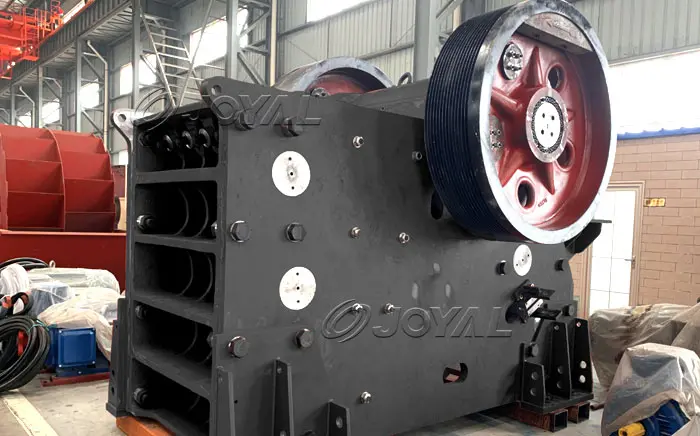
- Jaw Plates: Made of high manganese steel (ZGMn13), offering strong wear resistance with a lifespan of 6–12 months.
- Eccentric Shaft: Forged from high-strength alloy steel with dynamic balance precision ≤0.5 mm.
- Adjustment Device: Hydraulic or wedge-type discharge opening adjustment with ±2 mm accuracy.
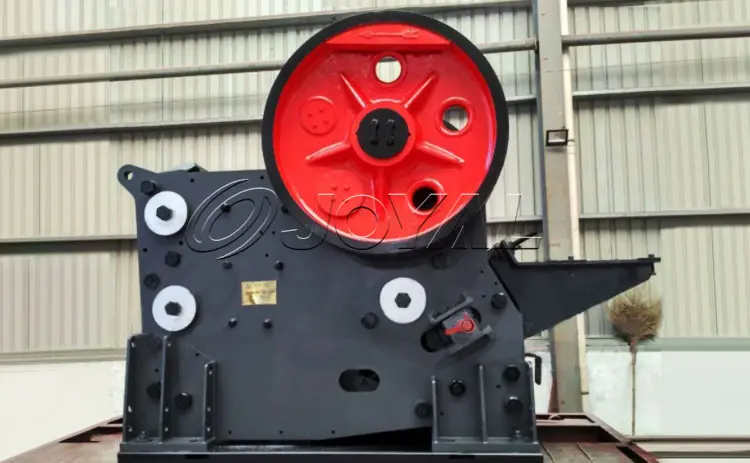
- Flywheel Design: Stores energy, balances load fluctuations, and reduces motor impact.
3. How to Choose the Right Jaw Crusher for Your Quarry
3.1 Selection Based on Production Requirements
- Small Quarries (Daily output ≤1,000 tons): PE-600×900 series
- Medium Quarries (Daily output 1,000–3,000 tons): PE-750×1060 or PE-900×1200
- Large Quarries (Daily output ≥3,000 tons): PE-1200×1500 or custom models
3.2 Selection Based on Rock Characteristics
- Highly Abrasive Granite: Choose low-speed, heavy-duty models (speed ≤250 rpm)
- Layered Limestone: Opt for deep-cavity designs to prevent clogging
- High-Clay Content Materials: Equip with pre-screening or washing devices
3.3 Energy-Saving Configuration Suggestions
- Variable Frequency Drive Motors: Save 15%–25% electricity, ideal for areas with significant peak/off-peak price differences.
- Intelligent Lubrication Systems: Reduce oil consumption by 30% and extend bearing life.
- Wear Parts Upgrade: Use composite ceramic jaw plates to increase lifespan by 50%.
4. Installation and Layout Optimization Strategies
4.1 Foundation Construction Essentials
- Concrete grade ≥ C30, depth 1.5 times the equipment height
- Reserve vibration isolation trenches (300 mm wide, 500 mm deep) filled with rubber pads
- Installation leveling error ≤ 0.5 mm/m
4.2 Production Line Layout Recommendations
[Raw Material Bin] → [Vibrating Feeder] → [Jaw Crusher] → [Transfer Stockpile]
       (Spacing ≥8 m)        (Discharge belt inclination ≤18°)
- Height difference between feeder and crusher: 1.5–2 m to avoid impact
- Discharge conveyor width ≥ 1.5 times the crusher’s discharge opening width
5. Daily Maintenance and Troubleshooting
5.1 Maintenance Schedule
| Task | Daily | Weekly | Monthly | Semi-Annually |
|---|---|---|---|---|
| Bearing Temperature Check | ✓ | – | – | – |
| Fastener Inspection | ✓ | – | – | – |
| Lubrication Grease | – | ✓ | – | – |
| Jaw Plate Wear Measurement | – | ✓ | – | – |
| Eccentric Shaft Calibration | – | – | ✓ | – |
| Comprehensive Overhaul | – | – | – | ✓ |
5.2 Common Troubleshooting
- Decreased Output
- Causes: Worn jaw plates, oversized discharge opening
- Solutions: Adjust discharge opening or replace jaw plates
- Abnormal Vibration
- Causes: Loose foundation, unbalanced flywheel
- Solutions: Tighten anchor bolts, perform dynamic balance testing
- Bearing Overheating (>70°C)
- Causes: Insufficient lubrication, contamination, or overload
- Solutions: Replace lubricant, check load conditions
6. Industry Trends and Technological Innovations
6.1 Intelligent Upgrades
- IoT Monitoring: Real-time tracking of output, power consumption, and wear data
- Predictive Maintenance: Early fault warnings (up to 2 weeks in advance) via vibration analysis
- Automatic Adjustment Systems: Optimize discharge openings based on material hardness
6.2 Green Mining Requirements
- Enclosed Design: Dust concentration ≤10 mg/m³ (national standard)
- Noise Control: Overall noise ≤85 dB (measured 1 m from equipment)
- Water Circulation Systems: Achieve zero-discharge crushing operations
7. Purchasing Decision Checklist
Before selecting a jaw crusher for your quarry, confirm:
- Daily production requirements are clearly defined
- Material compressive strength tests are completed
- Future 3-year capacity expansion is considered
- Energy consumption data from at least 3 suppliers is compared
- Local spare parts availability and technical service response times are confirmed
- Compatibility with intelligent monitoring systems is evaluated